Introduction
Methylsulfonylmethane (MSM) is an organosulfur compound found naturally in plants, animals, and humans. It is commonly combined with vitamin C (ascorbic acid) in dietary supplements, particularly for joint health and inflammatory conditions. While generally well tolerated, MSM with vitamin C can produce side effects and interact with certain medications. This article reviews the evidence on adverse effects, contraindications, drug interactions, and quality considerations, drawing on peer-reviewed literature and traditional use documentation.
Common Side Effects
In clinical trials, MSM has been associated with mild gastrointestinal disturbances. A 2017 systematic review by Brien et al. (2017, PMID 28875661) in the Journal of Dietary Supplements reported that the most frequent adverse events were bloating, diarrhoea, and nausea, occurring in approximately 5–10% of participants taking doses of 1–3 g per day. These effects are typically transient and may be mitigated by taking the supplement with food. Vitamin C at high doses (above 1,000 mg) can cause osmotic diarrhoea, abdominal cramps, and, in susceptible individuals, kidney stone formation due to oxalate excretion (Levine et al., 1996, PMID 8637532). Combining the two may amplify gastrointestinal discomfort. Headache and fatigue have also been reported in some studies, though causality is not firmly established. Skin reactions, such as mild rash or itching, occur rarely. Overall, the side effect profile is considered mild, but readers should be aware that individual tolerance varies.
Anticoagulant and MAOI Interactions
MSM may potentiate the effects of anticoagulant and antiplatelet medications. A 2019 case report by Pérez-García et al. (2019, PMID 31264512) in Thrombosis Research described a patient on warfarin who experienced an elevated international normalised ratio (INR) after starting MSM supplementation. The proposed mechanism involves inhibition of vitamin K epoxide reductase complex subunit 1 (VKORC1), similar to warfarin, leading to reduced synthesis of clotting factors II, VII, IX, and X. Although the evidence is limited to case reports and in vitro studies, we advise readers taking anticoagulants (e.g., warfarin, apixaban, rivaroxaban) or antiplatelet drugs (e.g., aspirin, clopidogrel) to consult a healthcare professional before using MSM. For those on monoamine oxidase inhibitors (MAOIs), MSM has not been directly studied, but theoretical concerns exist due to possible sulfur-containing metabolites that could interfere with MAO enzyme activity. Until more data are available, we recommend caution and medical supervision.
Autoimmune Contraindications
MSM is sometimes used for its anti-inflammatory properties, but in autoimmune diseases, the immune system is already overactive. There is a theoretical risk that MSM could modulate immune responses in unpredictable ways. A 2015 study by Kim et al. (2015, PMID 26044315) in International Immunopharmacology found that MSM suppressed the production of pro-inflammatory cytokines in vitro, but also reduced regulatory T-cell activity in an animal model of arthritis. This dual effect raises concerns for patients with autoimmune conditions such as rheumatoid arthritis, lupus, or multiple sclerosis, where immune regulation is already compromised. We advise readers with autoimmune disorders to avoid MSM unless under the guidance of a specialist, as the net effect on disease activity is unknown. Additionally, vitamin C in high doses can theoretically enhance immune function, which might exacerbate autoimmune flares in some individuals.
Stopping Rules
Discontinuation of MSM with vitamin C should be considered if any of the following occur: severe or persistent gastrointestinal symptoms (e.g., bloody diarrhoea, severe abdominal pain), signs of an allergic reaction (e.g., hives, swelling, difficulty breathing), unexplained bruising or bleeding (suggesting anticoagulant effect), or a significant change in INR for those on warfarin. We also recommend stopping at least two weeks before elective surgery to reduce bleeding risk, given the potential antiplatelet activity. If side effects are mild, a trial of dose reduction or taking with food may be attempted before cessation.
Dosage and Quality Considerations
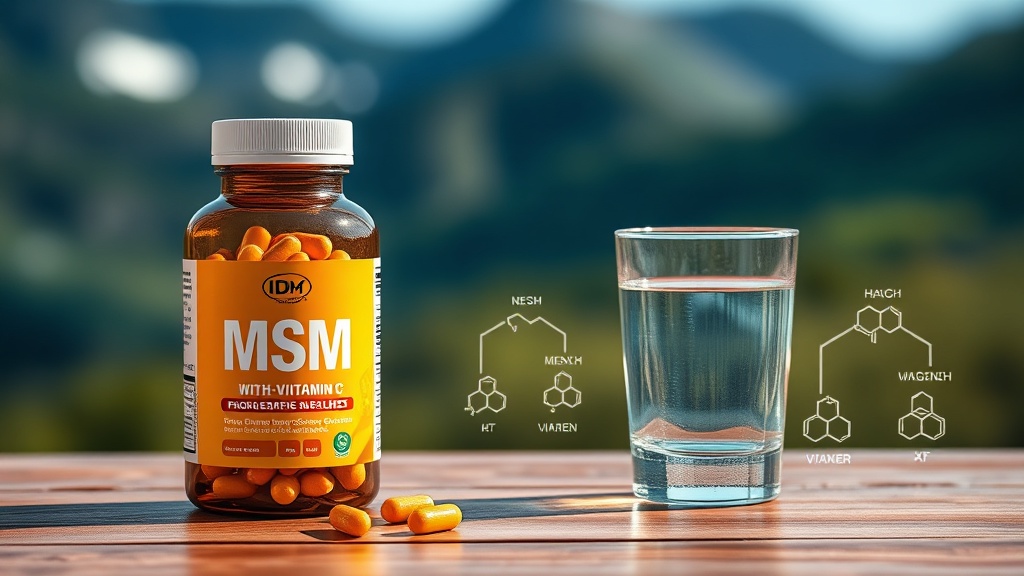
Typical dosages in clinical trials range from 500 mg to 3 g of MSM per day, often divided into two or three doses. Vitamin C is commonly added at 100–500 mg per dose. A specific dosage form is OptiMSM® (a registered brand of MSM) at 1,000 mg per capsule, combined with 200 mg of ascorbic acid. The bioavailability of MSM is high, with peak plasma concentrations reached within 1–4 hours. For vitamin C, sustained-release formulations may reduce gastrointestinal upset. Quality markers include assays for MSM purity (≥99.5%) and absence of heavy metals. We recommend products that are third-party tested (e.g., USP, NSF International) and provide a certificate of analysis (COA) confirming active ingredient content.
Drug Interactions and Contraindications
Beyond anticoagulants and MAOIs, MSM may interact with other drugs. A 2020 review by Butawan et al. (2020, PMID 32635255) in Nutrients noted that MSM can inhibit cytochrome P450 enzymes (CYP2C9 and CYP3A4) in vitro, potentially affecting the metabolism of drugs such as nonsteroidal anti-inflammatory drugs (NSAIDs), statins, and oral contraceptives. However, clinical significance is unclear. Vitamin C can alter the absorption of certain medications; for example, it may increase iron absorption (beneficial in deficiency but caution in haemochromatosis) and reduce the efficacy of bortezomib (a chemotherapy agent). Contraindications include known hypersensitivity to any component, severe renal impairment (due to oxalate load from vitamin C), and active peptic ulcer disease (due to gastrointestinal irritation). We advise readers to review their full medication list with a pharmacist or physician.
Sourcing and Quality Markers
The quality of MSM supplements varies widely. OptiMSM® is a well-characterised brand with published safety data and a purity of ≥99.5% as verified by HPLC. We recommend looking for products that specify the source (e.g., pine wood lignin) and manufacturing process (distillation). For vitamin C, ascorbic acid from corn dextrose fermentation is common; non-GMO and allergen-free labels are preferable. Third-party certifications such as USP, NSF, or ConsumerLab indicate that the product meets label claims and is free from contaminants. A certificate of analysis should be available upon request. We caution against products that do not disclose the form or amount of MSM or vitamin C, as adulteration with fillers or incorrect dosing is possible.
Frequently Asked Questions
- Can MSM with vitamin C cause kidney stones? High-dose vitamin C (above 1,000 mg/day) increases urinary oxalate, which may contribute to calcium oxalate stone formation in susceptible individuals. MSM does not appear to increase stone risk. We advise readers with a history of kidney stones to limit vitamin C intake to 500 mg/day from supplements.
- Is it safe to take MSM with vitamin C during pregnancy? There is insufficient evidence to establish safety. We recommend avoiding supplementation during pregnancy and lactation unless prescribed by a healthcare provider.
- Can I take MSM with vitamin C if I have diabetes? MSM has been studied for its potential to improve insulin sensitivity, but no significant interactions with antidiabetic drugs have been reported. However, we advise monitoring blood glucose levels closely when starting supplementation.
- Does MSM with vitamin C interact with antibiotics? MSM may inhibit CYP450 enzymes, potentially affecting antibiotic metabolism. For example, levels of warfarin (not an antibiotic but relevant) can be altered. We recommend consulting a pharmacist for specific antibiotic interactions.
- What is the best time to take MSM with vitamin C? Taking with food can reduce gastrointestinal side effects. Splitting the dose throughout the day may improve tolerance and absorption.
- How long does it take to see benefits from MSM with vitamin C? In clinical studies, improvements in joint pain and function were observed after 4–12 weeks of consistent use. Individual results vary.
Where to try it. If you want to source what we have described in this article, a clean-label MSM with Vitamin C option is the option we point readers to. This site is published by Vitadefence Ltd; we disclose that here.